Showing posts with label UNESCO. Show all posts

Tuesday, December 20, 2016

Freetown


On the trip, we spent the most time in Freetown.
I managed to venture out and see a few national monuments, some of which have been submitted to UNESCO for listing on their World Heritage List.
Photos from Freetown are now up in the galleries.
That concludes our trip to Sierra Leone.
I've added the galleries to my Travel page and the tentative sites to my UNESCO page.
Enjoy.


Monday, August 22, 2016

NOT Drumheller


After the Rockies, we headed east of Calgary.
First we visited Drumheller, then Dinosaur Provincial Park.
Apparently, a lot of people get the two mixed up.
Drumheller is home to the Royal Tyrrell Dinosaur Museum.
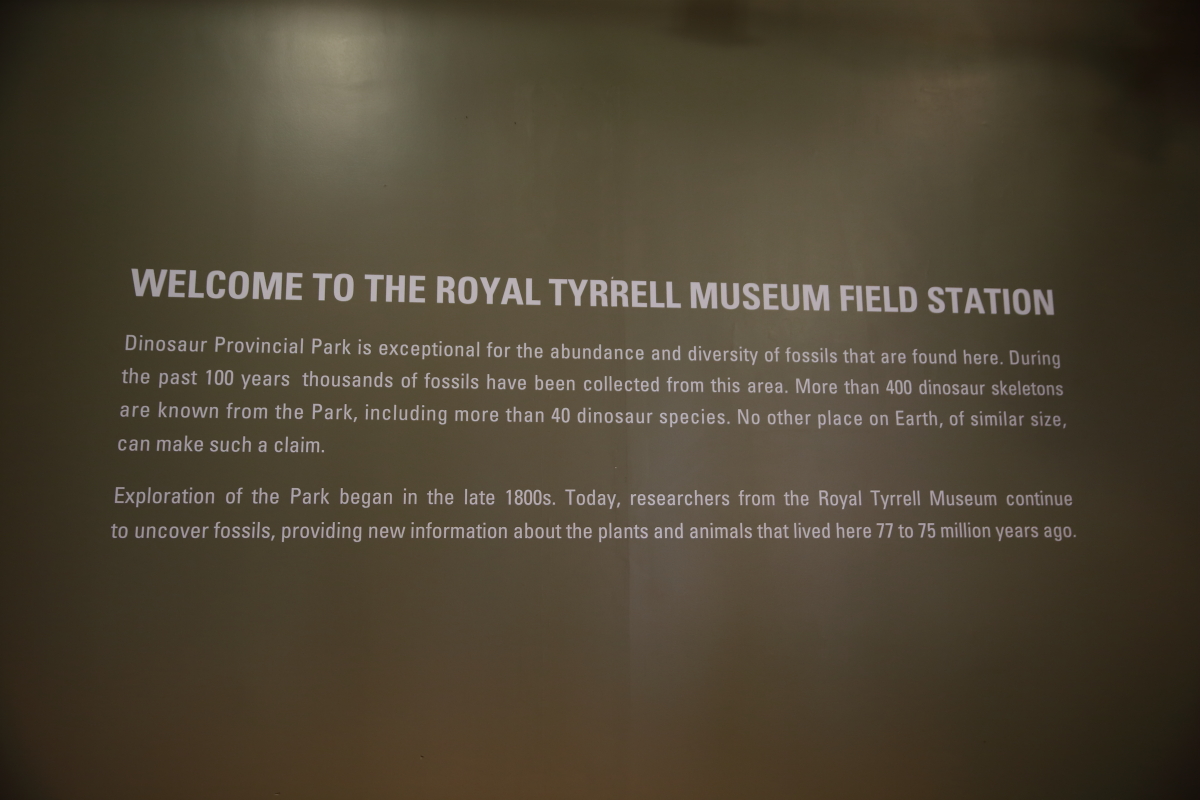
Dinosaur Provincial Park is a UNESCO World Heritage Site and is where more than 400 dinosaur skeletons (more than 40 species of dinosaur) have been found.
One place displays dinosaur fossils, the other is a source of dinosaur fossils.


It was rainy and mosquito-y the day we were there, but that didn't stop me from wandering the park.
The left-in-ground fossil displays were pretty neat as was the mini-museum.


Pictures from Dinosaur Provincial Park are now up in the galleries


Thursday, August 18, 2016

Banff


It was a short trip to Banff/the Rockies.
We spent two nights in Banff before heading east.
The hotel we stayed at was on the side of a mountain (can be seen on the bottom right of the picture below).


It had spectacular views, but was a bit old and dusty.
We visited the Cave & Basin national historic site - back in 1885, Canada's first national park was created due to these springs.


A place of particular personal interest was...well, its actually two places:

First, right next to the Cave & Basin site is a pavilion commemorating the internment camps of WWI. The exhibit is called Enemy Aliens, Prisoners of War and had a section about how Ukrainians were held in internment camps during WWI because at the time Austria occupied Ukraine. And it mentioned how they were forced to do hard labour, to create the roads in the Rocky Mountain parks for example.

The second place was along the old highway 1 at the base of Castle Mountain. This is where they put a statue and plaque commemorating those "enemy aliens" who were held at the Castle Mountain camp.


The reason these hold personal interest to me is that my great grandfather, who was in his early twenties at the time, was interned at Castle Mountain/Banff for years (of hard labour) during WWI.

Spectacular views, Canadian history, personal history - overall a great destination.

Pictures of Banff are up in the galleries


Wednesday, August 17, 2016

Jasper


First gallery up is Jasper, a UNESCO World Heritage site.
Lovely place, lovely drive to Jasper.
Enjoyed lunch at a local restaurant and got to see Jasper the Bear.
What more could you ask for?


Pictures from Jasper are up in the Galleries


Friday, August 5, 2016

A few days in Alberta


Just got back from a short photo trip in Alberta.
We managed to see some of the Rockies, as well as some dinosaur  fossils.


Banff, Jasper, Drumheller and Dinosaur Provincial Park – two UNESCO world heritage sites, a museum or two, and some interesting historical sites.
Pictures to come.


Tuesday, November 10, 2015

East Coast 2015 Wrap Up


From Quebec to Nova Scotia to Newfoundland to Labrador and back again, it was a great roadtrip.
I put close to 7700kms on the SRT in the end and managed to see quite a lot of the east side of the country.
Other various pictures from the trip are up in the galleries.


This completes the trip galleries, so I've added it to my travel destinations.
Enjoy!


Saturday, September 12, 2015

So Gros


Gros Morne was spectacular.

Sure, it was foggy and rainy on the first morning in the park, but it cleared by evening and we had a couple days of great sunsets.


I would definitely go back when junior is a bit older and can hike.


Monday, August 17, 2015

L'Anse aux Meadows


L'Anse aux Meadows, Newfoundland Canada, is the only authenticated site of Norse settlement in North America and is the first cultural site in the world to be inscribed upon the UNESCO World Heritage List.


From this site, the Norse first encountered aboriginal North Americans.
When humans migrated out of Africa, some went East, eventually migrating across Asia and crossing over to North America (via the land bridge between what is now Russia and Alaska, or via water).
Some went west, eventually making it all the way to Europe and then to Iceland.
These Vikings then crossed to L'Anse aux Meadows and were the first people from the west to encounter the people from the east.
Completing the circle.


Saturday, July 25, 2015

Hunted until there weren't enough to hunt


During the 16th century, whalers from the Basque Region of Spain and France where making seasonal voyages across the Atlantic to Labrador in pursuit of Right and Bowhead whales for the lucrative European market of whale products, in particular whale oil.


Gran Baya, as it was called by those who founded the station in 1530s, was used as a base for coastal hunting, butchering, rendering of whale fat to produce oil. It became a major source of whale oil which was shipped to Europe where it was used for lighting.

Until they pretty much hunted them all.


Friday, July 24, 2015

North America's Fortified City


Québec is the only North American city (north of Mexico) to have preserved its ramparts, together with the numerous bastions, gates and defensive works and is one of the best examples of a fortified colonial city.


Being there was like strolling the streets of a medieval European town.


I loved it.

Wednesday, July 22, 2015

370 Million Year Old Fish


From the Coal Age fossils at Joggins, our travels brought us even further back in time at Parc National du Miguasha.
Here the fossils were from the Age of Fishes (370 million years ago).
Miguasha, like Joggins, is a unique location full of fossils.

Apparently they've found the largest number and best-preserved lobe-finned fish fossils here.
These are the fishes, according to those crazy evolutionists, that gave rise to the first four-legged, air-breathing terrestrial vertebrates, aka the tetrapods.
Of course tetrapod fossils are what can be found at Joggins. Maybe we visited these sites in the wrong order?

Cheirolepis Canadensis


As a ray-finned fish, the descendants of this guy's group make up almost 60% fo the present-day aquatic and terrestrial vertebrate species.
I wonder if that includes us?

Pictures from Miguasha.

PS - we stayed in a hotel in Carleton-sur-Mer, which was a very picturesque town.


Sunday, July 12, 2015

Coal Age Galapagos


Located on the Nova Scotia side of the Bay of Fundy, Joggins Fossil Cliffs is the world’s most complete fossil record of life in the Coal Age, about 300 million years ago. 

It was here that Sir William Dawson discovered the first true reptile (hylonomus lyelli), the first animal to live on land and not in the water. 


When it comes to evolution, this little milestone recorded at Joggins remains pivotal to understanding the origins of all vertebrate life on land, including us humans. 

Crazy I know! 


Saturday, July 11, 2015

British were Jerks


A dark period for British rule in the new world. 

 Pictures from Grand PrĂ©.

Wednesday, July 8, 2015

Loonieburg


Nova Scotia has three UNESCO World Heritage List sites.
From amphibian fossils, British town planning, to Acadian expulsion, they are a varied example of our Canadian history.

First up, Lunenburg:

Tuesday, July 7, 2015

East Coast 2015


Just got back from a 3 week road trip out east.
Over 7300km later and we managed to see every UNESCO world heritage list site on the east side of Canada. 
Many, MANY photos to come.


Tuesday, December 24, 2013

Kyoto


Kyoto was amazing.
Kyoto and Koyasan were the highlights of the trip to Japan.
Kyoto is rich with history.


And UNESCO World Heritage Sites.


Seven to be exact.


We managed to see four: Kinkakuji Temple with the Golden Pavillion, Nijo Castle, Toji Temple and Nishi-Honganji Temple.


And still managed to see some other great sites, like Daitokuji temple, Gion Corner and the Geisha area, as well as a traditional Kyomai show.


I could have spent weeks there and not seen enough.


I'd love to return at some point in the near future.
Pictures from Kyoto are up in the galleries.